HEUG opens doors for OSFA’s Kristen McRoberts, UW–Madison to lead in responses to federal aid changes
When Kristen McRoberts first began serving on the Higher Education User Group’s (HEUG) Campus Student Financial Support (CSFS) advisory group six years ago, COVID-19 was still reshaping higher education and the world.
A global pandemic wouldn’t be the only large-scale challenge she and the Office of Student Financial Aid (OSFA) would navigate during her two terms chairing the group, though.
In 2021 and 2022, Congress passed legislation to simplify the Free Application for Federal Student Aid (FAFSA), which made it easier for students and families to complete but resulted in significant software changes and less data to determine aid awards.
Then in 2025, Congress passed the One Big Beautiful Bill Act, bringing significant changes like reduced lifetime borrowing limits to the federal direct loan program.
Fortunately, HEUG provided McRoberts opportunities to learn from and lean on fellow financial aid professionals from around the country during unsettled times.
Professional growth
It was a predecessor, Mary Hilstrom, who encouraged McRoberts to get involved with HEUG, and former vice provost for enrollment management and HEUG president Steve Hahn who nominated her for the CSFS advisory group.
At first, she admits, “I don’t know if I was 100% sure what I would get out of it,” but it quickly became clear that there were benefits for both her and the university.
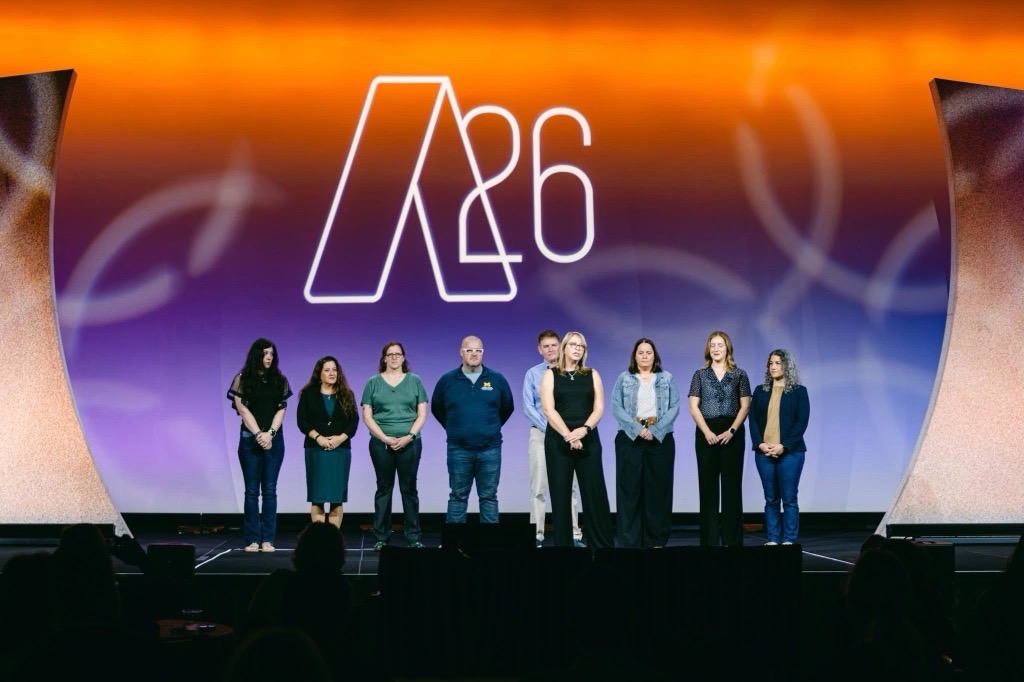
“I think despite the countless hours – and I’m probably talking hundreds of hours over the last six years that I’ve invested in the organization – I gained so much back in return, both professionally and personally,” she says. “I would say I never liked to public speak. Before you knew it, I was doing a presentation at Alliance every year and leading monthly coffee breaks for nearly 200-300 people every month.”
Among the most enduring benefits she gained were the connections with fellow financial aid professionals.
“It gave me an opportunity to create really meaningful relationships with colleagues from across the country, ones that you can ask questions that you may not want to ask at a public forum,” she says. “Because you’ve built these connections, they’ll help you troubleshoot, bring you new initiatives.”
A competitive advantage
The close relationships that OSFA team members – McRoberts and Chris Lopac – developed with Oracle as a result of their HEUG memberships provided opportunities to shape changes to the PeopleSoft platform that serves as the base of the university’s Student Information System.
“We were telling them how we want certain pages laid out, or our interpretation of the federal guidelines and how that should be implemented,” McRoberts says, “so we really got to drive how Oracle was implementing some pretty major federal regulations within the system.”
Those connections were also key to UW–Madison being selected as a beta tester for the U.S. Department of Education’s updated process for sharing FAFSA data.
Working closely with Oracle to test and troubleshoot process issues allowed OSFA to receive FAFSA data earlier. This early access to FAFSA data and the Oracle software gave the team valuable time to review and validate the data, make necessary adjustments to packaging philosophy, and ultimately get a head start on preparing and delivering financial aid offers to students.
“We were allowed to make business decisions about code that was coming early on, and even during the beta testing, we weren’t allowed to tell other institutions what we were using or what we were working on because it was still proprietary at that point,” she explains. “But it really laid the groundwork for us to get a jump start on certain things, because this whole project was under a tight timeline, right? We were getting changes from the Department of Education, those were coming also through Oracle to implement, so things were moving very, very fast. And we always have a goal of the on-time delivery of financial aid offer notices to make us competitive, so it gave us a one-up, actually, on getting our financial aid offers out earlier than many other schools.”
Cultivating leadership
With her time on the advisory group concluded, McRoberts is now encouraging members of her team to get involved with HEUG or other professional development organizations – in big ways or small ones – to help them grow into the next cohort of financial aid leaders.
“I think it can be intimidating at first, because the thought is people in the advisory group know everything, that’s what it feels like when you’re young and you’re coming in, but I would say that’s far from the truth,” she says. “They really do lean on each other.”
Succession planning and building a deep bench are crucial, she notes, to ensuring operational continuity and responding to whatever unforeseen challenges emerge in the future.
Beyond the boundaries of campus, UW–Madison’s status as a flagship university brings more attention to how the university is responding to the challenges of the day. With a depth of experience and resources that not every institution has, UW–Madison can lead in ways that help higher education as a whole.
“Being part of HEUG really made me feel the Wisconsin Idea,” McRoberts says.
This article is part of a series highlighting the Division of Enrollment Management’s contributions to higher education beyond the boundaries of UW–Madison, in keeping with the Wisconsin Idea and our Strategic Framework.